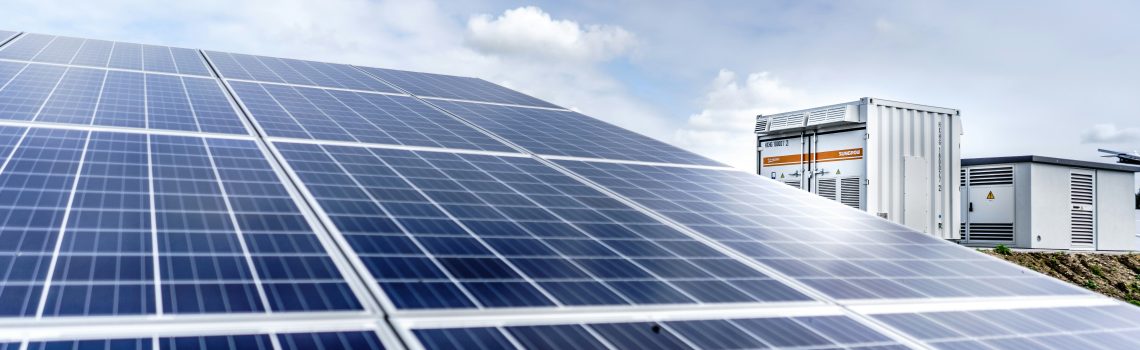
The Gulf Cooperation Council (GCC)—comprising Saudi Arabia, UAE, Qatar, Kuwait, Oman, and Bahrain—is undergoing one of the most significant energy transitions globally. Historically dependent on hydrocarbons, these economies are now aggressively accelerating renewable energy deployment to diversify their energy mix, enhance long-term energy security, and meet ambitious net-zero commitments.
The scale of this transition is substantial. The region’s renewable energy capacity stood at approximately 16.44 GW in 2024 and is projected to reach nearly 43.8 GW by 2033, reflecting sustained double-digit growth. More importantly, GCC countries collectively aim to install around 165 GW of renewable capacity by 2030, requiring an estimated USD 60 billion in investments between 2025 and 2030. This shift is not only policy-driven but also economically rational, as solar generation costs in the region are among the lowest globally due to high irradiation levels and declining technology costs.
For investors, developers, EPC players, and technology providers, the GCC presents a high-potential yet structurally complex market. Entering this region is not simply about identifying opportunities—it requires deep alignment with policy frameworks, procurement models, and country-specific risks.
At GreyRadius Consulting, we view GCC renewable market entry as a multi-dimensional strategy challenge—where opportunity identification must be tightly integrated with regulatory alignment and risk-balanced execution.
GCC Renewable Energy Market Overview
The growth momentum in the GCC renewable energy market is driven by a combination of national energy transition strategies, strong government backing, and increasing private sector participation. Solar energy dominates the region’s renewable mix due to abundant sunlight, cost competitiveness, and scalability, while wind energy is gaining traction in specific geographies such as Saudi Arabia and Oman.
Country-level ambitions further reinforce this momentum. Saudi Arabia is targeting up to 130 GW of renewable capacity by 2030 as part of its Vision 2030 strategy, while the UAE aims to achieve a 44% clean energy share by 2050 through its Energy Strategy 2050. Oman and Kuwait are also expanding their solar and wind programs to reduce dependence on hydrocarbons and improve fiscal sustainability.
Additionally, the region is witnessing record-low solar tariffs, with some projects achieving prices below USD 0.02 per kWh, positioning the GCC as one of the most cost-efficient renewable energy markets globally.
Key Opportunities in the GCC Renewable Energy Market
One of the most prominent opportunities lies in utility-scale solar projects. Large solar parks across Saudi Arabia and the UAE are creating significant entry pathways for developers, EPC contractors, and technology providers through Independent Power Producer (IPP) projects, engineering and construction contracts, technology partnerships, and long-term operations and maintenance services. These projects benefit from scale, government backing, and long-term power purchase agreements, making them attractive for institutional investors.
Another rapidly emerging opportunity is in green hydrogen and energy export ecosystems. GCC countries are strategically positioning themselves as global leaders in green hydrogen production by leveraging low-cost renewable energy and existing export infrastructure. Mega-projects such as NEOM in Saudi Arabia are already setting the foundation for large-scale hydrogen production and export, creating opportunities across electrolyzer manufacturing, renewable integration, industrial decarbonization, and export logistics.
Distributed solar and rooftop installations are also gaining momentum as regulatory frameworks evolve to support private-sector participation. Businesses and commercial consumers are increasingly adopting rooftop solar solutions, enabling new business models such as solar leasing and energy-as-a-service, which reduce upfront capital requirements and improve adoption rates.
At the same time, energy storage and grid modernization are becoming critical enablers of renewable expansion. Investments in battery storage systems and smart grid infrastructure are accelerating to address intermittency challenges and ensure stable, round-the-clock power supply. This creates opportunities for technology providers and grid solution companies.
Furthermore, public-private partnerships (PPP) and IPP models remain central to the GCC’s renewable expansion strategy. Governments continue to rely on structured procurement models with long-term PPAs, offering predictable revenue streams and clearly defined risk allocation mechanisms for investors.
GCC Renewable Energy Regulatory Landscape
The regulatory environment across GCC countries is evolving rapidly but remains highly country-specific. Saudi Arabia’s National Renewable Energy Program (NREP), supported by the Public Investment Fund, plays a central role in driving large-scale project development. In the UAE, regulatory clarity, competitive auctions, and investor-friendly policies have made it one of the most mature renewable markets in the region.
Oman has established a structured IPP pipeline for solar and wind projects, supported by transparent procurement frameworks, while Kuwait and Bahrain are gradually advancing their renewable strategies with evolving regulatory mechanisms.
Across the region, procurement is typically characterized by government-led auctions, long-term PPAs, state utility offtakers, and highly competitive tariff bidding processes. These frameworks provide stability but also intensify pricing pressure.
Foreign investment policies vary across countries, often requiring joint ventures with local partners, adherence to local content requirements, and compliance with investment approval processes. In many cases, technology transfer and localization expectations are also embedded within project structures.
Additionally, net-zero commitments and climate governance frameworks are strengthening regulatory momentum, creating long-term visibility for renewable investments.
Key Market Entry Challenges
Despite strong growth prospects, entering the GCC renewable energy market is not without challenges. Regulatory variability across countries requires highly localized strategies rather than a one-size-fits-all approach. Utility-dominated market structures increase counterparty risk, as state entities often act as sole offtakers.
Pricing pressure is another major concern, as competitive auctions continue to drive tariffs to historically low levels, compressing margins and increasing the need for cost efficiency. Grid infrastructure constraints can delay project execution, particularly in regions where transmission capacity has not kept pace with renewable deployment.
Financing complexity also remains a key challenge, as long-term PPA commitments require careful structuring to manage fiscal exposure and investor risk.
Risk Mitigation Strategies for GCC Market Entry
A structured and phased entry approach is critical for managing risk in the GCC. By entering the market in stages, organizations can build regulatory understanding, validate partnerships, reduce capital exposure, and gradually develop local capabilities.
Partnership-led strategies play a crucial role in navigating the region’s complexity. Collaborating with local partners helps organizations manage procurement processes, regulatory approvals, and relationship dynamics, while also meeting localization requirements.
Diversification across countries and technologies can further reduce exposure to regulatory and tariff risks, enabling a more balanced portfolio approach.
Contract structuring is equally important, particularly in managing PPA-related risks. Mechanisms such as tariff escalation clauses, currency hedging strategies, performance guarantees, and payment security structures can significantly improve financial resilience.
Developing localized supply chains also enhances competitiveness by reducing costs, improving regulatory alignment, and strengthening long-term operational sustainability.
GreyRadius Consulting Perspective: Execution-First Market Entry
At GreyRadius Consulting, we approach GCC renewable energy market entry through a structured strategy-to-execution framework that transforms opportunity into actionable growth.
This begins with market prioritization, where countries are evaluated based on attractiveness, policy incentives, and competitive dynamics. Regulatory feasibility assessment follows, focusing on procurement models, ownership structures, and licensing pathways.
Entry model design is then tailored to each market, determining whether organizations should participate as developers, EPC players, or through joint ventures. This is complemented by risk-balanced investment planning, including financial modeling, PPA analysis, and scenario planning.
Finally, a detailed execution roadmap ensures that strategy translates into action, covering stakeholder engagement, partner identification, bid strategy, and implementation planning.
Strategic Recommendations for Market Entrants
Organizations entering the GCC renewable energy market must avoid treating the region as a homogeneous entity. Each country requires a tailored approach aligned with national energy agendas and regulatory frameworks. Partnership-driven entry models, disciplined pricing strategies, and strong localization capabilities are essential for long-term success.
Equally important is the ability to build internal regulatory intelligence and adapt quickly to evolving policy environments, ensuring that strategic decisions remain aligned with market realities.
Conclusion
The GCC renewable energy market represents one of the most attractive global growth frontiers, supported by strong policy backing, large-scale investments, and ambitious decarbonization goals.
However, success in this market is not driven by opportunity alone. It requires a structured, execution-ready strategy that balances regulatory alignment, partnership ecosystems, financial discipline, and operational capability.
For organizations willing to navigate complexity with discipline and strategic clarity, the GCC offers a powerful platform for scalable renewable energy growth and long-term value creation.