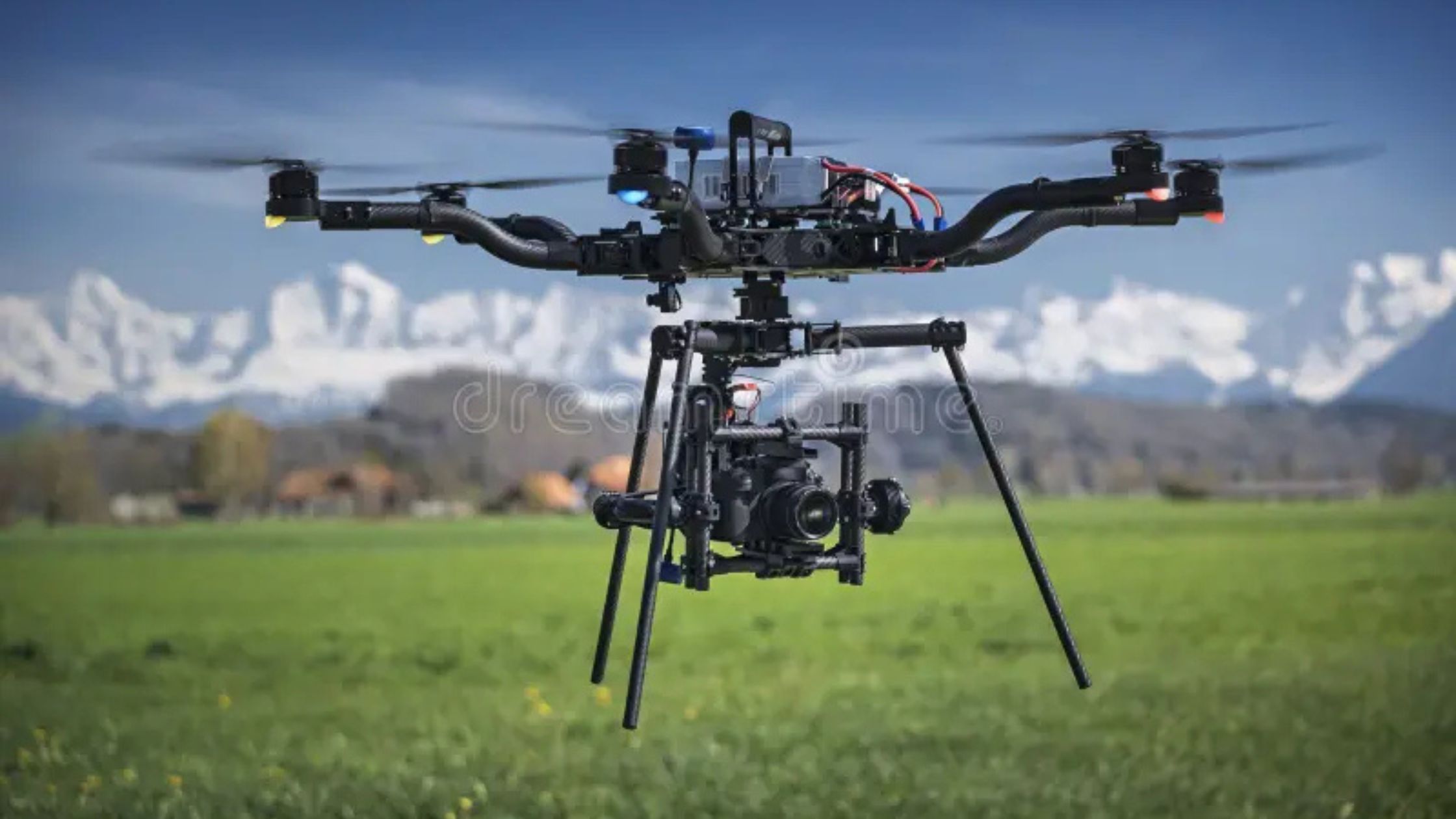
When this drone startup first came to GreyRadius, the headline looked fine. India had crossed 29,000 registered drones. Infrastructure, mining, agriculture — serious sectors were starting to figure out what drones could actually do for them. The policy environment was loosening. Industry events were full.
The founders had identified opportunities. They'd started conversations. There was genuine interest from potential clients — meetings happening, discussions going somewhere. On the surface, things were moving.
But nothing was sticking.
Conversations would start well and then drift. Deals would get close and then slow down. The pipeline had volume but not velocity. And the harder question — which segment to actually bet on, and how to convert interest into revenue — didn't have a clear answer.
The market was growing. Their business wasn't keeping up with it. Those are two very different problems.
Challenge
From a distance, the challenge seemed straightforward: enter a growing market before the competition hardens, capture early demand, build from there. In practice, it was considerably messier.
The
The drone ecosystem in India isn't one market — it's several markets that happen to share a technology. Infrastructure behaves differently from agriculture. Agriculture behaves differently from industrial monitoring. The buyers are different, the evaluation criteria are different, the operational realities are different. A pitch that landed well in one vertical fell flat in another, and the team didn't always know why.
Clients were curious, but cautious. Most were still in the process of working out whether drones would genuinely improve their operations or just add cost and complexity to processes that already worked. That uncertainty showed up in the sales process. Conversations would stall during evaluation. Pricing discussions got complicated because the value wasn't always obvious to the person making the decision.
Inside the startup, the instinct was to move fast — try more verticals, explore more use cases, keep conversations open across multiple fronts. It's an understandable response to uncertainty. It also meant that effort was being spread thin across too many directions without meaningful progress in any of them.
The market looked large. The part that was actually ready to buy, right now, at a price point that made sense, was much smaller. And nobody had drawn a clear line around it yet.
GreyRadius Approach
The first thing GreyRadius did was resist the urge to produce a strategy. That sounds counterintuitive. It's also, in our experience, the most important discipline in early-stage GTM work.
Before any recommendations were made, the team spent time on project sites and in direct conversation with the people who would actually use or manage drone services day-to-day. Not just the leadership teams who were interested in the idea — the operations managers, the project leads, the people on the ground who would have to make it work in practice.
Those conversations surfaced things that wouldn't have appeared in any deck or data room.
In some cases, senior leadership was enthusiastic about drones, but the teams responsible for execution weren't convinced. They had legitimate questions about output reliability, about how drone data would actually fit into existing workflows, about what happened when something went wrong in the field. Those doubts were real obstacles, and they weren't going to get resolved by a better sales pitch to the people at the top.
In other cases, the interest was genuine but conditional — conditional on a price point that would have made it very hard to build a sustainable business. Understanding that early, rather than after months of negotiation, was valuable.
The competitive picture was also worth looking at closely. Not just who the competitors were, but how they were actually winning work. Often it came down to things that had nothing to do with technology — reliability, simplicity, a clear scope of work, someone picking up the phone when something went wrong. These were areas where a focused startup could compete directly.
Internally, the team mapped cost structures and delivery models with an honest eye on scalability. What could actually be repeated at volume? What looked efficient at small scale but would break under pressure?
What came back from all of this was a clearer picture than the one the founders had been working from. The opportunity was real. It was also narrower, and more specific, than the broad market narrative suggested. The path forward wasn't to expand faster. It was to focus better.
Sharpening the Focus
Narrowing the Segment - The first concrete decision was to stop trying to serve everyone. Multiple verticals, multiple use cases, multiple buyer profiles — it spread the team thin and made the offering hard to explain. Instead, the startup concentrated on a smaller number of segments where demand was more visible, buyers already understood why drones might be useful, and projects could actually be delivered without constantly reinventing the wheel.
That sounds obvious in retrospect. Most good decisions do.
Changing the Conversation-The way the startup was talking about itself also needed to shift. The default pitch was technology-forward: capabilities, specs, what the drone could do. That's a natural starting point for a team that came from the technical side of the business. But buyers — especially operational buyers evaluating whether to change an established process — don't start with technology. They start with outcomes.
Faster inspections. Lower cost per data point. Better visibility into something that was previously hard to track. These were the terms that moved conversations forward. The technology was still the mechanism, but it stopped being the headline.
Keeping the Model Practical-The go-to-market structure was kept deliberately simple: direct engagement with enterprise clients, supported by partnerships where they genuinely accelerated things rather than just adding complexity. No elaborate channel architecture that would take months to build and maintain. Pricing was also reworked — not just to be more competitive, but to reflect what the business actually needed to sustain itself, not just to win the first deal.
Where Most Plans Fall Apart
Strategy documents are easy to produce. Making them work in actual client conversations, with real objections and real timelines, is harder. That's where most of the effort went.
Early client conversations were treated as intelligence-gathering as much as selling. Which questions kept coming up? Where did decisions slow down? What framing seemed to move things, and what didn't? The answers weren't always what the team expected.
Some assumptions didn't survive contact with real clients. A couple of approaches that looked strong in planning fell apart once tested. That's not failure — that's the process working as it should. The point is to find out early, not late.
Over time, patterns started to emerge. Sales conversations became more focused. Clients got to the point of understanding the offering faster. Internal teams developed clearer instincts about what to prioritise and what to let go.
Basic execution discipline was put in place alongside this — tracking the metrics that actually mattered, making sure teams were aligned on priorities, carrying learnings forward from each client interaction instead of treating every engagement as a fresh start.
None of it was revolutionary. Most of what works in early-stage commercial execution isn't. The goal was to build a system that actually functioned — not a perfect one, just a working one.
Impact
Results didn't arrive overnight. They rarely do when you're fixing the fundamentals rather than chasing a quick win. But they built steadily, and they built on each other.
Client conversations became more productive. Conversion rates improved. Sales cycles shortened — not because the product changed, but because the target was clearer and the pitch was sharper.
The more significant shift was internal. The startup stopped operating like a company that was trying everything at once and started operating like one that knew what it was doing. That clarity changed how the team spent its time, which changed what got built, which changed what could be sold.
Traction in the focused segments made it possible to go deeper — better delivery, stronger relationships, the kind of reference accounts that make the next conversation easier. That's a different kind of momentum from closing a one-off deal. It compounds.
Conclusion

The drone industry in India will keep evolving. New use cases will emerge, regulations will shift, the competitive landscape will change. There's no permanent answer in a market that's still taking shape.
But what this engagement reinforced — and what we see repeatedly in early-stage markets — is that the startups which find commercial traction first are rarely the ones with the most sophisticated technology or the broadest ambition. They're the ones that get specific fast. That trade the comfort of a large addressable market for the clarity of a well-defined beachhead. That stop explaining their product and start explaining what it does for you.
In this case, the shift wasn't complicated. Less assumption about what clients wanted. More time actually finding out. A tighter target, a clearer message, and the discipline to execute on both rather than drift back toward doing everything.