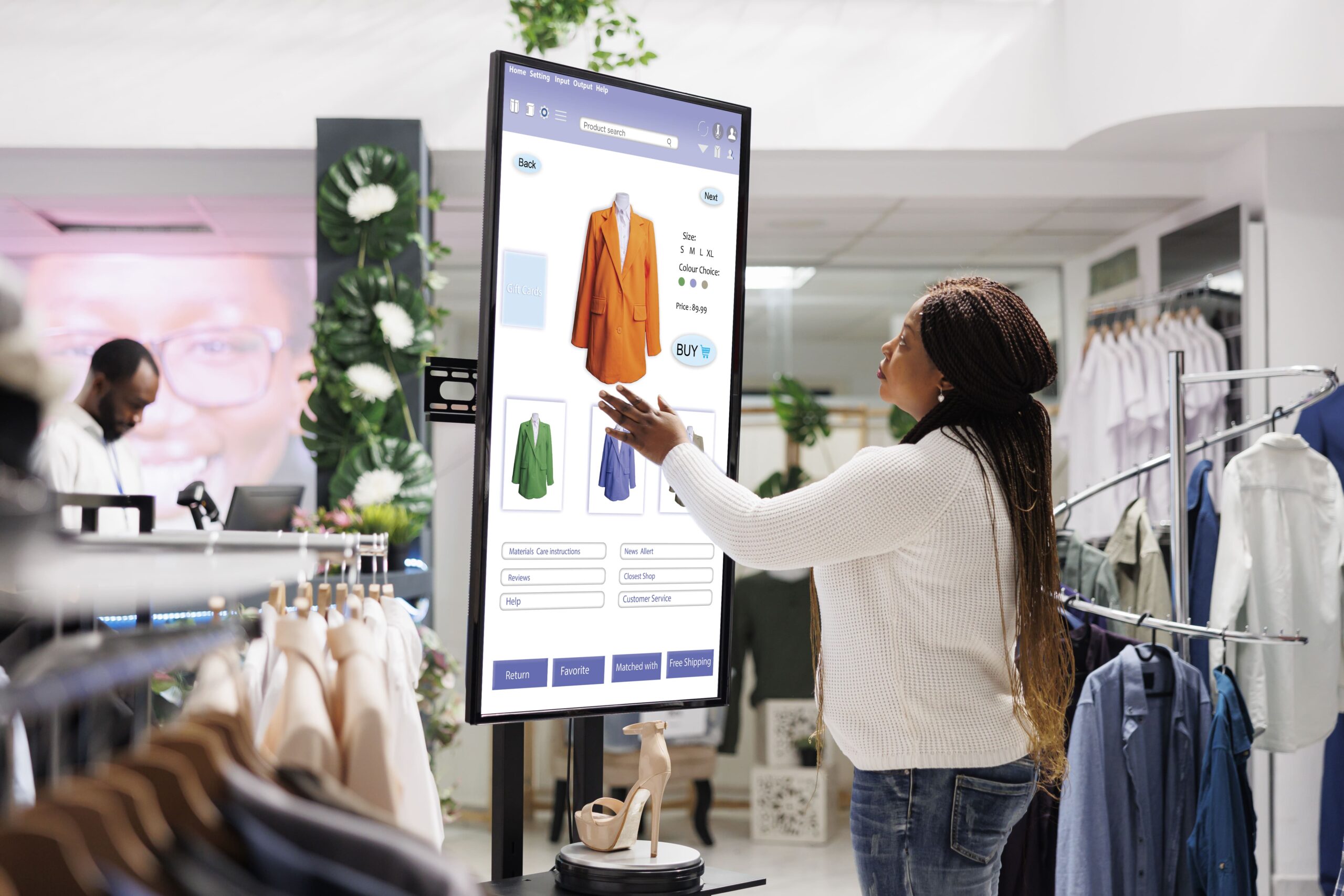
A strong retail product launch strategy has emerged as a primary segment that brands need to cater to amidst rising inventory code or tag failures, along with high costs of stagnant stocks and increased pressure on product margins. Moving on, keeping this in mind, launching new products is not only about visibility in the market, but it’s also about getting the sectors right before rolling out the product into the markets.
For many small or large enterprises and their chief executive leaders, also known as CXOs, who are backed by management consulting companies in Dubai or strategic planning consultants, the challenge lies not in launching new products. Rather, it is believed that demands are on a constant basis, followed by a pricing structure as well as portfolio ranking, which are all matters in scaling.
However, most rollout strategies start after execution, within most companies.
That is where the actual real problem starts to begin.
Major Rollouts of the Retail Industry Initiate from the Wrong Part
The majority of the retail companies have been treating product rollout plans as a major initiative for expansion issues. However, the primary focus is based on getting an improved shelf life, building collaborative network channels and also accelerating visibility within markets.
This present strategy revolves around the fact that the demand is already present and only needs to be attended to, which makes it lack a reality check with the present market conditions.
At the present state, the demand in any market is not assured; it needs to be created as well as aligned with consumer purposes and needs, depending on their buyer persona. However, in the absence of this kind of approach, it creates a struggle for newly launched products to maintain constant sales after the initial rollout in the market. Moving on, this is where b2b market research companies and market intelligence companies have been helping newly launched brands that have been upcoming to address the market and the buyers before they expand. Thus, this would help in creating or sourcing products that have a high shelf cycle, which also creates visibility and not just velocity for expansion and constant sales.

How the current Retail market is Risky for upcoming Brands
The present retail position has led upcoming brands to make mistakes that are even more expensive due to their current state.
However, with rising costs of sourcing, which directly impact and lead to high failure costs of execution plans at a significant level. Moreover, the factor of placing discount offers has also made buyers’ responses come down, leading to slow movement of products, and also eats up margins of the pricing, resulting in loss and weak positioning of the brand in the markets. Further, retail companies as well as distributors have been more selective in terms of choosing and only selecting products that have potential or have a history that showcases a constant sales cycle and buyer demand.
Following this, during the same time, the consumer buyer’s needs and behaviour have been shifting drastically. It has been observed that buying decisions, price ranges, and perceived branding across distribution channels have been a major part of networks. This is where the customer experience consulting and insights from healthcare industry market research have been taking up frameworks that function on real personas and demands of buyers across categories, as per regions. Further, assumptions about value and demands help in breaking through during real testing or rollout in the market.
In this context, an execution plan without any proper research on buyer needs or valid demands is not just ineffective but also will result in high losses or failures to the company.
Where Companies Get It Wrong
A pattern appears across underperforming launches.
Demand is primarily based on three major factors, which are internal frameworks, trends and feedback, which is limited. Further, pricing has been the final step on which demand is calculated, which needs to be accounted for among the distribution networks along with retailers, as well as others.
Many companies, as well as new upcoming brands, have been focusing on the drive to accelerate visibility to gain attraction within the markets, but tend to overlook the impacts or the velocity. Thus, it has been obtained that spaces on the shelf get secured, but the sales cycle consistency drops.
Therefore, pre-rolling out plans has been either overlooked or not taken into account as a primary factor. Moreover, a lack of rigorous process, which is backed or guided by a go-to-market agency or supported by an opportunity assessment plan, showcases that key issues that revolve around prices, position and consumer demands remain unresolved until execution. Thus, correction after launching becomes expensive.

The transition: From rolling out an execution plan to consumer demand-based designing and Pricing
At present, a more efficient yet effective strategy initiates with a different premise. Moreover, retail success has already been decided before it secures a safe space on the shelf.
This involves a process that starts from shifting execution-based rolling-out or launch plans to designing a system that is based on pricing and consumer needs – the kind of design thinking that is backed by government strategy consulting firms and corporate finance advisory services when firms make decisions that have high stakes or investments.
It has been observed that consumers’ demands need to be assured or validated through signals that involve controlled testing, market exposure at an early stage and feedback data based on buyer behaviour. Therefore, pricing needs to be calculated early on before rolling out based on alignment with the value chain, which caters from the distributor to the consumer.
A techno-economic feasibility study observes that during the early launching stages, analytical rigour needs to be done in order to come to assumptions that are based on stress tests based on channels or networks, as per geographical locations.
Based on execution or rollout decisions, which should be based on primary indicators that help in measuring and not just assumptions. Therefore, this involves product speed, followed by its performance across networks and also sustainable price margins without any discounts for consistent buying or selling cycles.
It has been observed that when consumer demands are based on alignment with prices, then launching becomes a reason to expand instead of becoming a reason for risks.
Further, launching a brand based on inventory codes or stock tags helps in understanding categories and inventory stocking trends. Thus, this helps the products to secure a high distribution and also attain visibility within the market. However, selling out due to the pressure of inventory stock or putting up discounts will result in less, resulting in attaining maximum scalability.
Thereby, this is why brands have been taking up different approaches. Following this, working with mgmt consulting partners and leveraging energy market research companies’ style scenario modelling for demand data of consumers, by taking up approaches that are based on introducing pre-launch testing in significant markets, refined pricing based on purchase behaviours, as well as repositioning based on consumer market results, attains consumer expectations. Further, distribution was scaled only after attaining a constant basis velocity or after a consistent velocity was established.
Therefore, within a few cycles, it has been obtained that within a few cycles, sell-through improved, discounting reduced, and margins stabilised.
What This Holds for Retail Leaders:
A strong retail product launch strategy is not just based on how fast the product gets delivered, but rather how fast it takes up space on the shelf. Moreover, it is defined how well demand and validation get aligned based on pricing for proper rolling out.
For many firms, managers or chief executive leaders like CXOs and other category leaders – along with those backed by business management consultants & SaaS consulting companies scaling into physical reality or helping firms that have been seeking market entry strategy in India, as well as high-growth markets – mean redesigning assumptions for strategic decisions. Thus, launching should start with validating the demands of consumers and not just with forming distributive networks or channels. Further, pricing should be treated as a core factor and not just an afterthought. Thus, success should be calculated based on velocity and price margins consistently and not just on initial visibility.
The transition is clear, which starts from rolling out plans to rolling out the right ones! Hence, this involves fixing issues after launch as well as scaling the design from the initial start.
Henceforth, most retail as well as other channels believe that they have been executing strong execution plans.
However, in the real world, they have been dedicating time to scale rather than validating what work they actually sell.
FAQs:
1. How do product rollouts fail in retail markets even after creating a strong visibility in the market?
In the start, visibility helps in creating a short-term attraction and not a demand that is consistent. Moreover, many products have been entering the markets, with a strong distribution network lacking alignment with price sensitivity, market positioning and buyer behaviours. Therefore, lack of early on-demand and velocity assumptions can slow down market sales and also lead to increased inventory issues and lead to discounts resulting in discounts and losses.
2. What are the ways a retailer approaches demands and validates them before execution or rolling out?
Validation, as well as demands, needs to be based on real buyer signals and not assumptions. Therefore, this involves testing, like controlled testing, which allows retailers to understand purchasers’ intentions and to understand how quickly a product can get safely on the shelf while also having repeat, consistent sales. The number of firms offering business valuation services and digital transformation consultant expertise has been increasing, which has led to the application of structured valuation frameworks in retail markets. Henceforth, the goal is to attain demand before expansion.
3. What role is played by pricing that ensures the successful launch of products?
Pricing is a major factor among retailers, distributors and others. Moreover, if it lacks alignment with the demands of consumers, it can affect margins and selling cycles. Designing pricing early, based on customer behaviour and channel dynamics, is critical for long-term performance. This is a core discipline within corporate finance advisory services and increasingly central to how business setup consultants in the UAE advise brands entering competitive retail markets. Whether guided by clinical trial consulting companies applying evidence-based methodologies to product testing or by traditional strategic planning consultants, the principle holds: pricing designed late is pricing designed to fail.