01 · Strategy
Opportunity Assessment
Should you play in this market?
30+ buyer interviews. Competitor maps. A clear go / defer / kill recommendation backed by primary data — not a database report.
Learn moreStrategy · Growth · Execution
Combining AI-enabled execution, deep commercial understanding, and hands-on strategic problem solving, we help founders, CXOs, and ambitious businesses turn growth opportunities into measurable business outcomes across the GCC, Southeast Asia, EMEA, and India.
Trusted by founders, CXOs, and government leaders across four continents.











Three things every GreyRadius engagement carries. Always.
Every engagement ends with a measurable output the client could not have produced alone. A market entered. A partner signed. A round closed. Billed on outcomes, not on hours or slides delivered.
AI is embedded across our consulting workflows – accelerating insight synthesis, modelling, GTM execution, and decision support to deliver faster, sharper, and more scalable outcomes, with delivery cycles accelerated by up to 3x.
Every strategic recommendation is strengthened through direct conversations with buyers, channel partners, operators, and industry experts across target markets. While AI accelerates desk analysis and synthesis, real market understanding comes from validating assumptions on the ground – through human interaction, commercial context, and firsthand market feedback. ~30+ interviews and 200+ surveys per mandate.
Three recurring problems. Three GreyRadius answers. Backed by primary research, not assumptions.
Before
GTM & Monetisation Challenges
After
Strategy Grounded in Primary Intelligence
Before
Strategy & Direction Gaps
After
Execution-Focused External Market View
Before
Product & Execution Disconnect
After
ROI-Driven Initiatives, Customer-Led
From the first question to the closed funding round, we have a fixed-fee, output-defined engagement built for it.
01 · Strategy
Should you play in this market?
30+ buyer interviews. Competitor maps. A clear go / defer / kill recommendation backed by primary data — not a database report.
Learn more02 · Feasibility
Is this play bankable?
Demand validation, unit economics, and a bankable financial model built for lenders, investors, and boards — not internal decks.
Learn more03 · Execution
Land the entity. Sign the partners. Get the first customer.
Entity setup, regulatory navigation, channel partnerships, and first-customer acquisition — managed end-to-end by our team, not handed off.
Learn more04 · GTM
We don't advise on GTM. We run the first 90 days.
ICP definition, outbound sequences, partner onboarding, and pipeline reviews — we own the motion so you can own the growth.
Learn more05 · Fundraising
From slides to closed round.
Investor-interview-backed narrative, data room, and targeted introductions to the right capital — built to close, not just to impress.
Learn more06 · AI
AI strategy that ships. Not a deck about transformation.
Use-case prioritisation, vendor selection, and a live pilot in 4–6 weeks — grounded in your workflows, not generic AI frameworks.
Learn moreIn the last 18 months we ran 540 interviews on Series A fundraising engagements. Here's the pattern in the rounds that closed in 90 days vs the ones that took nine months.
Dhiraj – Partner, Fundraising Practice
Read the full insightSame six steps across every offering.
Scope
Define the question worth answering
Listen
Primary research – real interviews, surveys, fieldwork
Decide
Synthesis to a clear recommendation
Build
Execution – entity, model, pipeline, or pilot
Deliver
Partner-led handover with full documentation
Measure
Output-defined outcomes tracked at 30/60/90 days
Listen first. Decide together. Then we ship it.
We calibrate every engagement to your product maturity and growth stage. No one-size-fits-all playbooks.
Stage I · A
New Product Ideation
Opportunity identification, white-space mapping, need-gap analysis
Stage I · B
Market Fit Assessment
ICP definition, competitive & customer intelligence, pricing & feature review
Stage I · C
Product Launch GTM
GTM execution, sales & marketing setup, partner ecosystem exploration
Stage II · A
Gap Analysis & Recommendations
Competitive battlecards, win-loss analysis, buyer-group intelligence
Stage II · B
Top-Line Enrichment
GTM re-planning, sales engine build-up, market & channel expansion
Stage II · C
Business Planning
Revenue, P&L & cashflow model, product launch timeline, sales planning
Stage III · A
Fundraising Readiness
Gap analysis, competitive intelligence, investor-ready narrative build
Stage III · B
Investment & M&A
Business valuation, funds sourcing, M&A target scouting
Stage III · C
Inorganic Growth
Product adjacency identification, acquisition scouting, post-merger roadmap
Three from the last 24 months.
Technology · North America
Energy & Chemicals · India
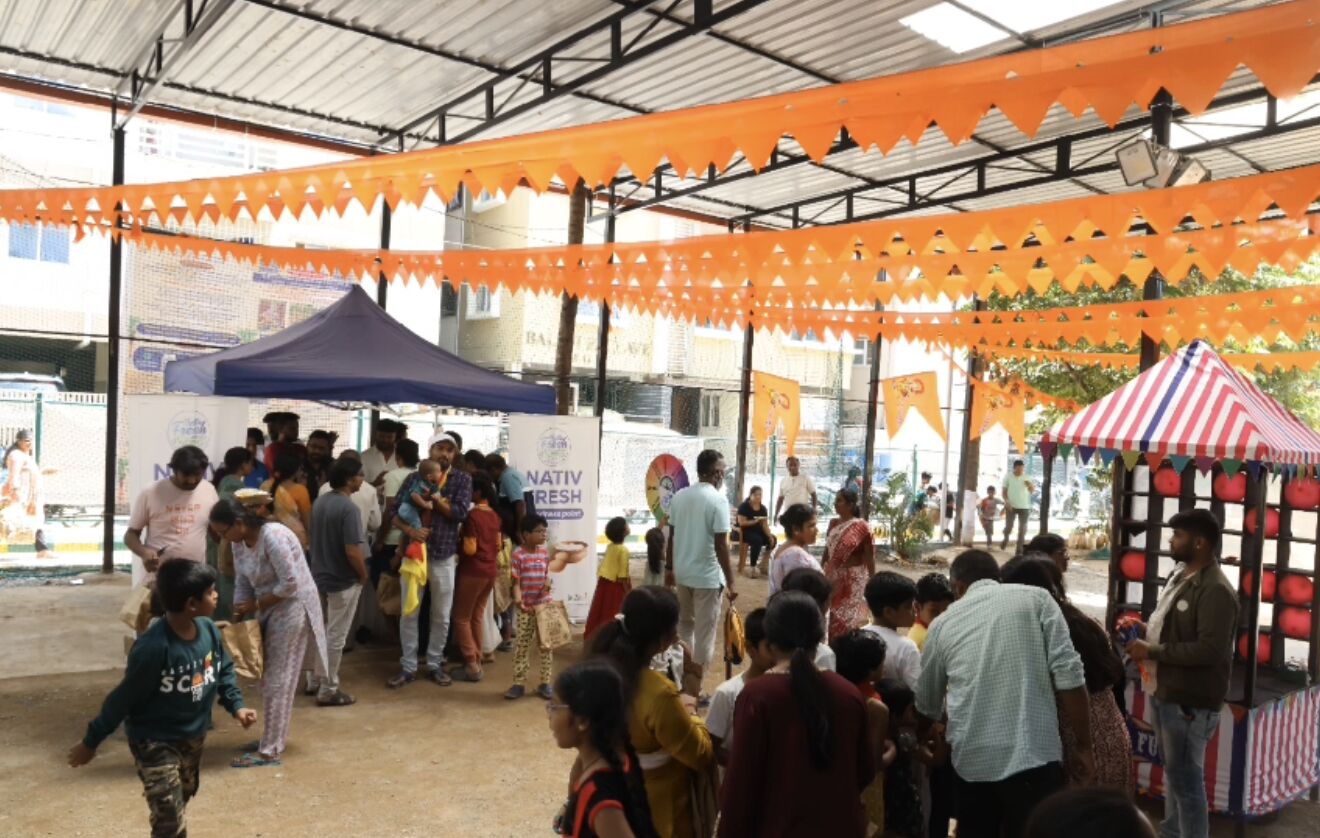
CPG / FMCG · India
GreyRadius was founded in 2017 to do what we couldn't do inside larger firms – sit close to the founder, close to the customer, close to the data. Nine years later we're four partners and a small team across Delhi, Dubai, Singapore, and Brussels. We've delivered 200+ projects.
If you want a top-tier consulting firms brand on your invoice, we're not your firm. If you want the partner who runs your engagement to also run the discovery call, the workshop, the interviews, and the negotiation – we are.
Chirag Bansal
Co-founder & CEO
Anshuman Kumar
Co-founder & CBO
Dhiraj Jain
Partner & VP, Fundraising
Pijush Sinha
Partner & VP, Strategy
Plus selective work in B2G and government advisory across India and the GCC.
30 minutes. No deck. No pitch. We'll ask three questions, you'll ask three, and we'll both know whether there's something here.
GreyRadius is a boutique strategy and growth consulting firm with offices across South Asia, the Gulf, Southeast Asia, and Europe. We help founders, CXOs, and business leaders with opportunity assessment, market entry, GTM execution, feasibility studies, pitch books, and fundraising – grounded in primary research and accelerated by AI.
Every engagement is run by the senior partner who sold it. We ground every insight in primary research – real interviews with buyers, experts, and channel partners, not database downloads. AI-augmented delivery compresses timelines without reducing quality. We bill on outputs, not hours.
We work with clients expanding into the Middle East, Southeast Asia, South Asia, and Europe. Our teams are present in four markets with active mandates across more than twenty countries.
We use AI internally across research synthesis, financial modelling, competitive mapping, and outreach automation. This compresses delivery timelines by up to 3x without replacing the primary research and senior judgment that drive real decisions.
Primary research means gathering insight directly from the market – through structured interviews, expert panels, CATI surveys, and field research. GreyRadius conducts ~30+ interviews and 200+ surveys per mandate. This is the input that desk research and AI cannot replicate.