Strategy to Execution · Market Entry Execution
What the Biggest Mistakes in Gulf Market Entry Have in Common
Five structural errors, one root cause, and a self-diagnostic before you commit budget. Dubai's Downtown skyline is not the UAE consumer market, and a UAE trade licence is not a Gulf trade licence.
Executive summary
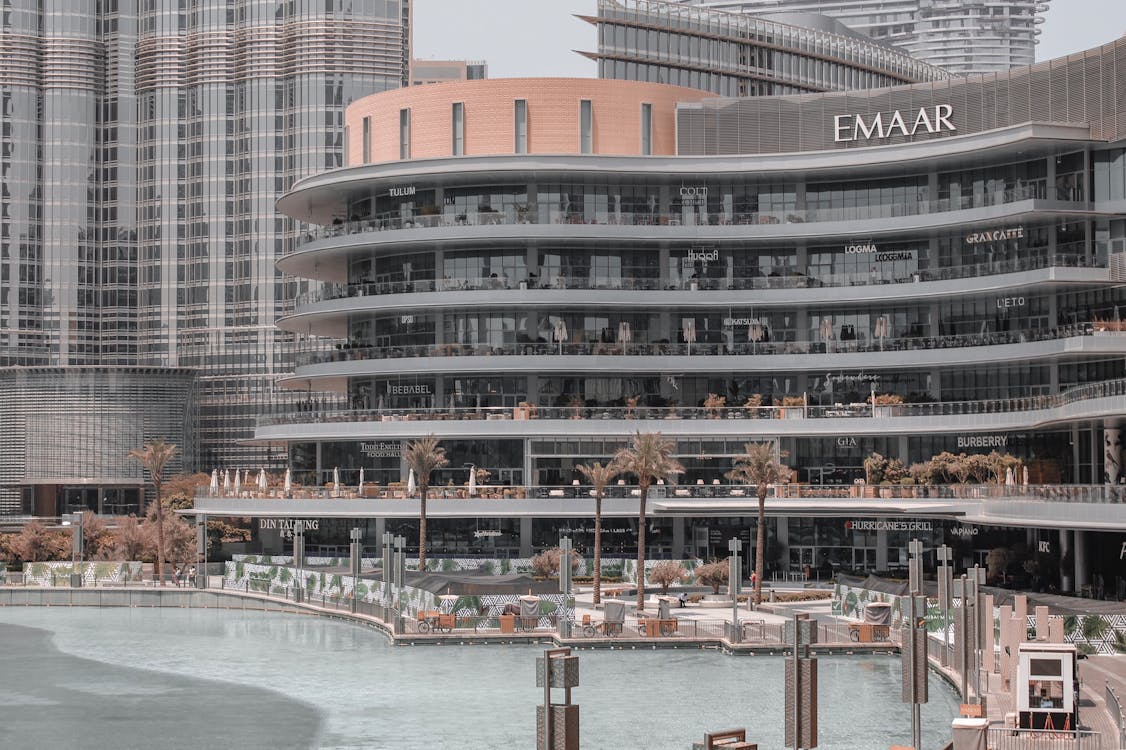
Dubai's Downtown skyline is not the UAE consumer market, and a UAE trade licence is not a Gulf trade licence. Every Gulf market entry failure GreyRadius has reviewed traces back to one of five specific, checkable mistakes, and all five share the same root cause: a company substituted a visible, familiar signal – tourist footfall, a 2018 sponsor rule, a converted price tag, a single Gulf launch date – for the verified, current, country-specific fact.
This piece names the five mistakes, illustrates each with a commercial scenario, and closes with a self-diagnostic you can run against your own launch plan today. It is written for founders, regional GMs, and business development leads who are past the "should we enter the Gulf" question and into the "how do we not repeat what everyone else got wrong" question.
Why these five mistakes keep repeating
Each of the five mistakes below looks like a different functional failure: a marketing team oversizes demand, an HR team under-plans headcount, a legal team signs the wrong structuring agreement, a finance team misprices, a commercial team treats six countries as one. But look at the underlying pattern and it is the same error five times over: teams anchor on the most visible Gulf data point – Dubai's skyline, a pre-2021 sponsor rule, a single regional MSRP, a customs union headline – instead of the specific, current, country-level fact that actually governs the decision.
The UAE and Saudi Arabia have run some of the fastest-moving regulatory reform programmes in the world over the last five years. Rules that were accurate in 2019 are frequently wrong in 2026. A market entry plan built on a two-year-old blog post, a competitor's assumed playbook, or a single site visit to Dubai Mall is not a plan. It is a guess dressed as a plan.
Mistake 1: Mistaking Dubai tourism for UAE consumer demand
Dubai received 9.88 million international visitors in the first half of 2025 alone, according to the Dubai Department of Economy and Tourism. Set that against Dubai's resident population of approximately 3.95 million as of June 2025 (Dubai Statistics Centre), and against the fact that Emirati citizens make up only around 11.5 percent of the UAE's total population of roughly 11.3 to 11.5 million (Worldometer; GMI). Tourist footfall in Dubai is several multiples of the resident base a retail, F&B, or consumer brand actually needs to convert into repeat, full-price, non-promotional revenue.
A European fashion brand scopes UAE demand using Dubai Mall footfall and Dubai International Airport duty-free sell-through as its proxy for market size. It builds a 12-month sales forecast, inventory plan, and store staffing model around that tourist-volume number. Eighteen months in, revenue plateaus well below plan, because the forecast never separated tourist spend – seasonal, price-insensitive, concentrated around a handful of malls – from resident spend, which is what sustains a business through the low-tourism summer months and funds a second location.
Model resident and tourist spend as two separate revenue lines from day one, not one blended forecast. If your business plan cannot survive on the resident-only number through a low-tourism summer, the tourist number is masking a structural gap.
Mistake 2: Underestimating Saudisation timelines
Saudi Arabia's Nitaqat programme, run by the Ministry of Human Resources and Social Development, requires private-sector employers to hire a minimum share of Saudi nationals, with quotas set by sector, company size, and specific profession. In retail, Saudisation can exceed 70 percent in specific job categories, and from 2025 MHRSD extended a phased 60 percent Saudisation requirement to marketing and sales roles at companies with three or more employees in those functions, according to Centuro Global and AstroLabs. A company that falls into the Red Nitaqat tier faces an immediate freeze on new work visas and blocked access to government tenders and portal services, per MHRSD-aligned guidance summarised by House of Saud and Analytix.
A company plans a Riyadh retail launch staffed almost entirely by expatriate store managers and merchandisers, intending to "backfill" Saudi hires once the store proves itself commercially. By month three, MHRSD's Nitaqat calculation downgrades the entity to Red for missing the marketing and sales quota. New work visas freeze at exactly the point the company needs to hire for a second location, and the Saudi launch stalls not because the product failed, but because the workforce plan was sequenced backwards.
Check your Nitaqat tier before you write the headcount plan, not after the first hiring round. Saudisation is a sequencing problem, not a compliance afterthought – hire Saudi nationals into the quota-bearing functions first, then backfill expat specialist roles around them.
Mistake 3: Choosing the wrong local sponsor or agent
Federal Decree-Law No. 32 of 2021 on Commercial Companies, building on Federal Decree-Law No. 26 of 2020 and effective from June 1, 2021, abolished the requirement for a UAE national to hold 51 percent of a mainland company for most commercial and industrial activities, according to the UAE government's official portal. Companies planning around a pre-2021 assumption still give up governance and equity to a local partner they no longer legally need for most activities. The reform did not remove every requirement, though: professional-licence activities and branches of foreign companies still require a Local Service Agent, who holds zero equity and has no management role, typically for a fixed annual fee of AED 8,000 to 20,000, according to Fakher & Co.
A consulting firm assumes the 2021 reform applies universally and skips appointing a Local Service Agent for its professional licence, only to have the Department of Economic Development reject the licence application because the LSA requirement still applies to professional licences specifically. Separately, a trading company, unaware the 51 percent rule was abolished for its activity, signs a full equity-sharing agreement with a local partner it did not need, permanently ceding governance rights it could have kept.
The 2021 reform is activity-specific, not blanket. Confirm your exact licensed activity against the current Local Service Agent and ownership rules before signing any structuring agreement – the right answer for a trading licence and a professional licence is not the same.
Mistake 4: Pricing at Western consumer rates
VAT is not uniform across the Gulf. The UAE and Oman apply a standard 5 percent rate, Bahrain applies 10 percent, and Saudi Arabia applies 15 percent, having raised its rate from 5 percent in 2020, according to a GCC-wide tax comparison published by Sovereign Group and corroborated by Vatabout. Kuwait and Qatar have not yet implemented VAT. A single regional MSRP, converted at the exchange rate and rolled out unchanged across markets, does not account for a 10-percentage-point swing in consumer-facing tax burden between the UAE and Saudi Arabia.
A consumer brand sets one AED price point, converts it to SAR at the prevailing exchange rate, and launches the same shelf price in both markets. In the UAE, the 5 percent VAT leaves the modeled margin intact. In Saudi Arabia, the 15 percent VAT compresses the same shelf price into a materially thinner margin than the UAE model assumed, because the pricing team built one regional price ladder instead of re-underwriting VAT, landed cost, and local competitor pricing market by market.
Build a per-market price ladder, not a single regional MSRP converted at spot rates. VAT alone can swing margin by 10 points between the UAE and Saudi Arabia – re-underwrite landed cost and local competitor pricing country by country before you lock a launch price.
Mistake 5: Treating GCC as one market
The GCC customs union, in force since January 2003, allows goods to move duty-free between member states once they have cleared the external tariff at a single entry point, according to the UAE's Federal Authority for Identity, Citizenship, Customs and Port Security. That duty-free goods movement is frequently mistaken for a single commercial market. It is not. Business licensing, e-commerce registration, and consumer-facing regulation remain separate by country: Saudi Arabia regulates e-commerce specifically under the KSA E-Commerce Law, Royal Decree No. M/126 of 2019, while the UAE governs foreign companies doing business locally under its own Commercial Companies Law framework, according to Al Tamimi & Company's analysis of GCC e-commerce licensing.
A company holding a UAE trade licence assumes the customs union lets it invoice and sell directly to Saudi consumers under that same UAE licence, since the product itself can move across the border duty-free. It later finds it cannot legally invoice a Saudi retail customer, register for Saudi VAT, or resolve a Saudi consumer dispute without a separate Saudi commercial registration, because the customs union governs goods movement, not the right to conduct business or sell to consumers in another member state.
Duty-free goods movement is not a licence to sell. Budget for separate commercial registration and e-commerce licensing in every GCC country you plan to invoice consumers in – not just the country where your goods first clear customs.
Self-diagnostic: five checks before you commit budget
Run these five questions against your own Gulf launch plan before you finalise budget, headcount, or pricing. Each maps directly to one of the mistakes above. If you cannot answer any one of these with a specific, current, source-backed fact rather than an assumption, that is the workstream to fix before launch, not after.
| Maps to | Self-diagnostic question |
|---|---|
| Mistake 1 | Can you separate resident consumer spend from tourist spend in your UAE demand forecast, with specific current data – not a blended footfall number? |
| Mistake 2 | Do you know your Nitaqat tier and Saudisation quota exposure for every function you plan to hire into before you sequence headcount? |
| Mistake 3 | Have you confirmed whether your specific licensed activity still requires a Local Service Agent or a majority local shareholder under the current rules – not the 2019 rules? |
| Mistake 4 | Have you re-underwritten VAT, landed cost, and local competitor pricing for each Gulf country individually, rather than converting one regional MSRP at spot rates? |
| Mistake 5 | Do you hold separate commercial registration and e-commerce licensing for every GCC country you plan to invoice consumers in, beyond the customs entry point? |
FAQs
What are the most common Gulf market entry mistakes?
The five most repeated structural mistakes are: sizing UAE demand from Dubai's tourist footfall rather than its resident consumer base, under-planning for Saudisation quotas before hiring, misunderstanding which entities still require a local sponsor or Local Service Agent after the UAE's 2021 ownership reform, pricing across the Gulf on a single converted rate that ignores VAT differences between markets, and treating the GCC customs union as a single commercial market when licensing and consumer regulation remain country-specific.
How long does it take to enter the Saudi Arabia market?
There is no single number, and sources disagree on the range, so treat any single-figure promise with caution. Document legalisation and embassy attestation for corporate documents can take four to eight weeks for some jurisdictions, according to InvestRiyadh's MISA licensing guide. Once documents are legalised, the MISA foreign investment licence itself is commonly issued within two to six weeks depending on sector and documentation quality, per SCPL KSA and SafaArban, though some simpler applications are approved in as little as three to ten business days according to Arab Future. Commercial Registration with the Ministry of Commerce typically adds one to two further weeks. A realistic all-in estimate for a foreign entity starting from unlegalised documents is two to four months to a fully licensed and registered Saudi entity, not the two-to-six-week figure that refers to the MISA licence step alone.
Do you need a local sponsor to do business in the UAE?
Not for most mainland commercial and industrial activities. Federal Decree-Law No. 32 of 2021, effective June 1, 2021, abolished the requirement for a UAE national to hold 51 percent of a mainland company for the large majority of activities, according to the UAE government's official portal. Exceptions remain for a defined list of strategic-impact sectors such as defence, oil and gas, and telecommunications, per Cabinet Resolution No. 55 of 2021. Separately, professional-licence activities and branches of foreign companies still require a Local Service Agent, who holds no equity and no management authority but is a mandatory administrative appointment, typically at a fixed annual fee, according to Fakher & Co.
Conclusion
Pick one number from this piece and go check it against your own plan this week: your UAE demand forecast, your Saudi hiring sequence, your entity structuring agreement, your per-market price ladder, or your GCC-wide licensing coverage. Whichever one you cannot immediately answer with a current, source-backed fact is the workstream carrying the most risk in your launch.
Assign a single owner to close that gap before it becomes a launch blocker, not after. GreyRadius runs a structured Gulf market entry diagnostic that pressure-tests exactly these five points against your specific sector, entity, and target country, and flags which ones need closing before you commit budget. If your organisation is planning a UAE, Saudi Arabia, or wider GCC entry, start there.
Official references
- UAE Government – Full foreign ownership of commercial companies
- UAE Federal Authority for Identity, Citizenship, Customs and Port Security – Customs Union for GCC States
- Dubai Department of Economy and Tourism – Dubai welcomes 9.88 million international visitors in H1 2025
- Al Tamimi & Company – Cross-border e-commerce in the GCC: a licensing perspective
- Sovereign Group – GCC tax comparison guide (VAT, corporate tax, compliance)
- Centuro Global – Saudization: what it is and how to comply
- AstroLabs – Saudi Arabia business setup: key Saudization updates
- House of Saud – Saudization (Nitaqat): employment rules for foreign companies
- SCPL KSA – Saudi foreign investment license: complete guide
- InvestRiyadh – MISA licensing: process, timelines and common pitfalls
- Fakher & Co – Local sponsor requirements in the UAE after 2021 reforms
Source note: statistics and timelines cited above reflect publicly available guidance as of mid-2026. Gulf regulatory rules, especially Saudisation quotas and licensing timelines, change frequently; verify current figures with MISA, MHRSD, and the relevant emirate authority before finalising a launch plan.
The GreyRadius Perspective
Every engagement at GreyRadius starts with a single question: what is the decision this work needs to support? The research, the interviews, the modelling – all of it is built backwards from that decision.
If this piece raised a question relevant to your business, the first conversation is 30 minutes with a partner – not a salesperson.
Talk to the team that built this thinking.
30 minutes. No deck. We ask three questions, you ask three, and we both know whether there's something here.
Get in touch →